Why Customer Service Is Designed This Way
You have a problem. A bill that is wrong. A service that is not working. A product that arrived broken. So you do what you are supposed to do. You contact customer service. And then the experience begins.
First, you try to find a phone number. It is not on the website. Or it is buried. Hidden behind layers of FAQs and chatbots and self-service portals. Eventually, you find it. You call. A recorded message tells you that your call is important. Then it offers you a menu. Press one for billing. Press two for technical support. Press three for account changes. You press the number that seems closest to your issue. Another menu. More options. You press again. And then, hold music. Your call is important to us. Please continue to hold.
Ten minutes pass. Fifteen. You are still holding. Finally, someone answers. You explain your problem. They tell you that you have reached the wrong department. They transfer you. More hold music. Another person answers. You explain again. They ask for your account number. Your postcode. Your date of birth. Information the system should already have. They put you on hold to check. Five minutes. Ten. They come back. They tell you they need to escalate this. They will create a ticket. Someone will call you back within twenty-four to forty-eight hours. No one calls you back.
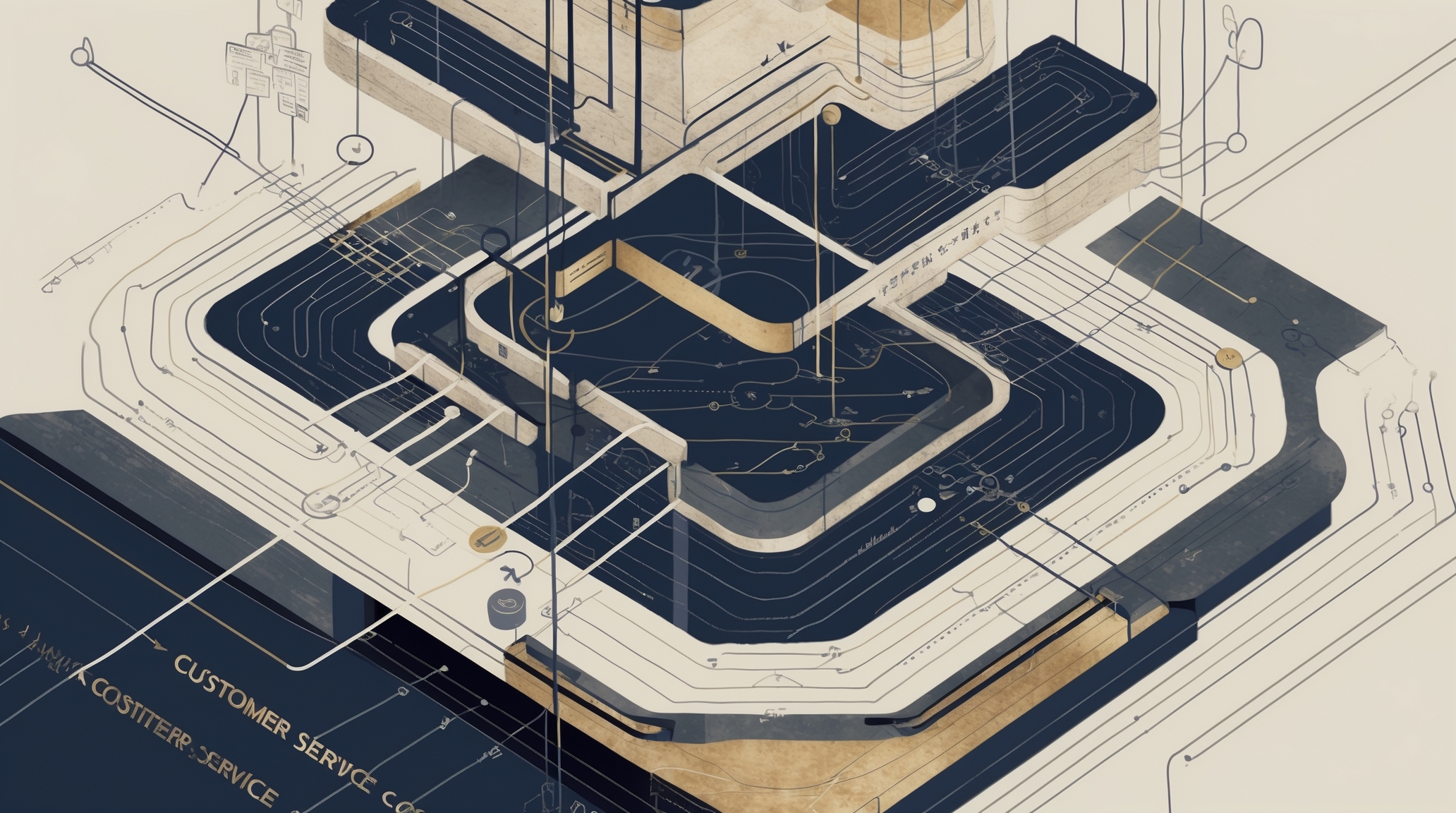
This is not an accident. This is not incompetence. This is design. And it is designed not to help you quickly. It is designed to reduce cost. Because every minute you spend on the phone with an agent costs the company money. And every problem you solve yourself, without ever reaching an agent, costs them nothing. So the system is optimized to make reaching an agent as difficult as possible. And to make solving the problem yourself, or giving up, as easy as possible.
Let me show you why customer service is designed this way.
The first thing to understand is that customer service is a cost center. It does not generate revenue. It does not create profit. It spends money. And companies, quite rationally, want to minimize costs. So the goal is not to provide the best possible service. The goal is to provide the minimum acceptable service at the lowest possible cost. And minimum acceptable is defined not by what customers want. But by what customers will tolerate before they leave.
This creates a very different optimization target than you might assume. If the goal were customer satisfaction, you would have instant access to knowledgeable agents who could solve your problem on the first call. But that is expensive. Agents are expensive. Training is expensive. Empowering agents to make decisions without escalation is risky. So instead, the system is designed to filter. To deflect. To delay. And to resolve as few issues as possible using expensive human labor.
This is why the phone number is hard to find. Because every call that does not happen is a cost avoided. The company would prefer you use the website. The FAQ. The chatbot. The community forum. Anything that does not require paying someone to talk to you. So they make those options prominent and the phone number obscure. Not because they do not care. But because caring is expensive. And expense is what they are optimizing against.
The second mechanism is the IVR. The interactive voice response system. The menu that makes you press buttons before you can reach a human. And the IVR has two functions. The first is to route you to the right department. The second is to deflect you entirely. Because embedded in that menu are options designed to make you give up. Press one to check your balance. Press two to make a payment. Press three to update your details. None of which require an agent. And many people, after navigating the menu, will either find the information they need or decide the problem is not worth the effort. Either way, the call does not reach an agent. Cost avoided.
The IVR is also deliberately complex. Multiple layers. Ambiguous options. No clear path to a human. Because complexity is friction. And friction reduces demand. If reaching an agent requires patience, persistence, and time, fewer people will do it. Not because the problem is not real. But because the cost, in time and frustration, exceeds the perceived benefit. The system is designed to test your resolve. And many people fail that test. Which is exactly what the system wants.
The third mechanism is hold time. You are not on hold because the company does not have enough agents. You are on hold because the company has exactly the number of agents it wants. Which is the number that balances cost against acceptable customer frustration. They could hire more agents. Hold times would drop. But agents cost money. So the company calculates. How long will customers wait before they hang up? How many will call back? How many will leave for a competitor? And they staff to that level. Not to zero hold time. To tolerable hold time. And tolerable is defined by what does not cause enough churn to hurt revenue.
This is why hold times are longest during peak periods. Not because the company is surprised by peak demand. They know when peaks happen. They just have not staffed for them. Because staffing for peaks means paying agents to sit idle during off-peak times. So they staff for average demand. And during peaks, you wait. The system has decided that your time is less valuable than their cost savings. And unless you leave, they are right.
The fourth mechanism is scripting. When you finally reach an agent, they are not empowered to solve your problem. They are following a script. A decision tree. If the customer says this, you say that. If the problem is this, you do that. The script is designed to handle common issues with minimal judgment. And it works for common issues. But your issue is not common. Or it does not fit neatly into the script. So the agent escalates. Or creates a ticket. Or tells you to call a different number. Not because they do not want to help. But because the system has not given them the authority or the tools to do anything else.
Scripting reduces training costs. You do not need highly skilled agents if the script does the thinking. You just need people who can read and follow instructions. And less skilled labor is cheaper. So the company scripts as much as possible. The cost is that edge cases, unusual problems, anything that requires judgment, cannot be resolved by the front-line agent. So those problems get escalated. Or ignored. And you, the customer, are left waiting.
The fifth mechanism is ticket systems. When the agent cannot solve your problem, they create a ticket. The ticket goes into a queue. Someone, eventually, will look at it. Maybe. The ticket system serves two purposes. It gives the appearance of action. You have been helped. A ticket has been created. And it delays resolution. Because the ticket does not require an immediate response. It just sits there. Waiting for someone in the queue to get to it. And the queue is long. Because the company has not staffed the back-end any better than they staffed the front-line.
Tickets also diffuse accountability. The person you spoke to did not solve your problem. But they did their job. They created a ticket. Now it is someone else's responsibility. And that someone else does not know you. Did not speak to you. Has no relationship with you. So there is no urgency. Your ticket is one of hundreds. And it gets processed when it gets processed. If you do not follow up, it might never get processed. And even if you do follow up, you will be told the same thing. Your ticket is in the queue. Someone will get back to you. No one does.
The sixth mechanism is the deliberate inconvenience of alternatives. If calling does not work, you try email. The response time is days, sometimes weeks. If email does not work, you try chat. The chat agent has even less authority than the phone agent. If chat does not work, you try social media. And sometimes, that works. Because public complaints are visible. They hurt the brand. So companies monitor social media and respond quickly to public complaints. Not because they care more. But because public complaints have a cost. Reputation damage. So those get prioritized. While your private ticket, your email, your call, those can be ignored. Because no one else sees them.
This creates a perverse incentive. The squeaky wheel gets the grease. If you complain loudly and publicly, you get helped. If you follow the proper channels quietly, you get ignored. The system rewards bad behavior and punishes patience. Not intentionally. But structurally.
The seventh mechanism is self-service funnels. The company wants you to solve your problem yourself. So they build portals. Knowledge bases. Video tutorials. Automated troubleshooting. Some of this is genuinely helpful. But much of it is designed to look helpful while being just difficult enough that you give up. Because giving up means the problem goes away. At least from the company's perspective.
Think about a cancellation process. You want to cancel a subscription. The website does not have a cancel button. Or it does, but it is hidden. You click through five pages. You are offered discounts to stay. You decline. You are asked why you are leaving. You skip. Finally, you reach a page that says, to cancel, please call this number. So you call. And you are back in the IVR. Back on hold. And when you finally reach an agent, they offer you more discounts. More reasons to stay. You decline again. They process the cancellation. Eventually. But the process was designed to make you give up. To make staying easier than leaving. And for many people, it works.
This is not customer service. This is customer retention. Disguised as process. And the process is deliberately cumbersome. Because cumbersome processes reduce churn. Not by making customers happy. But by making them too exhausted to leave.
The eighth mechanism is outsourcing. Many companies outsource customer service. To third-party providers. Often in countries where labor is cheap. The outsourcing company is paid per call, or per issue, or per hour. They are not paid based on customer satisfaction. They are paid based on volume. So they optimize for volume. Answer calls quickly. Resolve tickets quickly. Move on to the next one. Quality does not matter. Speed does. And the agents, who are often overworked and underpaid, have no investment in the company whose customers they are serving. They are just doing a job. Hitting their numbers. And moving on.
The company that outsourced the service does not care. Because outsourcing is cheaper than hiring internal staff. And as long as churn stays within acceptable limits, the cost savings justify the lower quality. You, the customer, experience this as poor service. Agents who do not understand the product. Who cannot make decisions. Who are just trying to get you off the phone. But from the company's perspective, the system is working. Cost is down. And most customers are not leaving. So why change?
The ninth mechanism is metrics. Customer service teams are measured. But not on customer satisfaction. On average handle time. First call resolution. Ticket closure rate. These are operational metrics. Not outcome metrics. And they create perverse incentives. An agent who spends time understanding your problem and solving it properly has a high handle time. An agent who rushes you off the phone has a low handle time. Guess which one gets rewarded.
First call resolution sounds good. But it is measured by whether the call is closed, not whether the problem is solved. So agents close calls. They tell you the problem is fixed. Even if it is not. Because closure is what gets measured. And what gets measured gets optimized. Even if the optimization produces bad outcomes.
So here is what you end up with. A customer service system designed to minimize cost, not maximize satisfaction. That makes reaching a human difficult. That scripts the humans you do reach. That delays resolution through ticket systems. That outsources to the cheapest provider. That measures the wrong things. And that punishes customers for being patient while rewarding those who complain loudly.
This is not broken. This is working exactly as designed. The design just is not for you. It is for the company. And the company has decided that the cost of providing good service exceeds the benefit. So they provide the minimum. And they rely on the fact that switching is hard. That most people will tolerate poor service rather than go through the effort of finding an alternative. And they are right. Most people do.
You cannot fix this. You do not control the system. But you can navigate it. Knowing that the system is designed to frustrate you, you can decide how much effort it is worth. Sometimes, it is worth fighting through the hold times and the transfers and the tickets. Sometimes, it is not. And knowing the difference saves you time, frustration, and energy.
The final article will bring it all together. It will show you, across all the systems you have seen, what you can actually change and what you cannot. Where your leverage is. Where your effort matters. And where the system is stronger than you, and fighting it is futile.
Because navigating systems is not about winning every battle. It is about knowing which battles are worth fighting. And which ones you should walk away from.