Money Is a System of Signals, Not Just Currency
You get a letter in the post. Your credit limit has been increased. You did not ask for it. You do not need it. But there it is. Five thousand pounds of available credit where there was none before.
And something shifts. Not immediately. Not consciously. But the possibilities in your mind change. That holiday you were not sure you could afford suddenly feels within reach. The car repair you were putting off becomes less daunting. The gap between what you earn and what you can spend just widened. And you have not received a single extra pound in actual income.
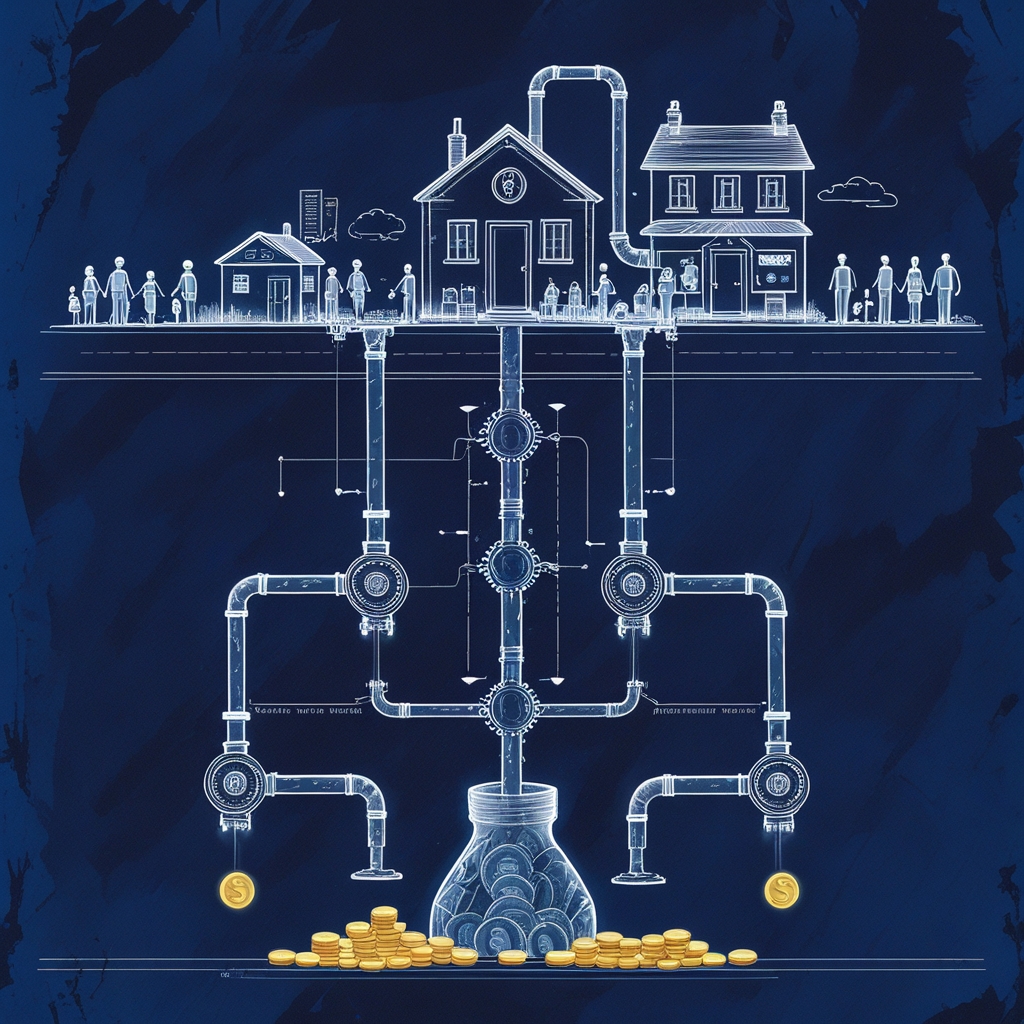
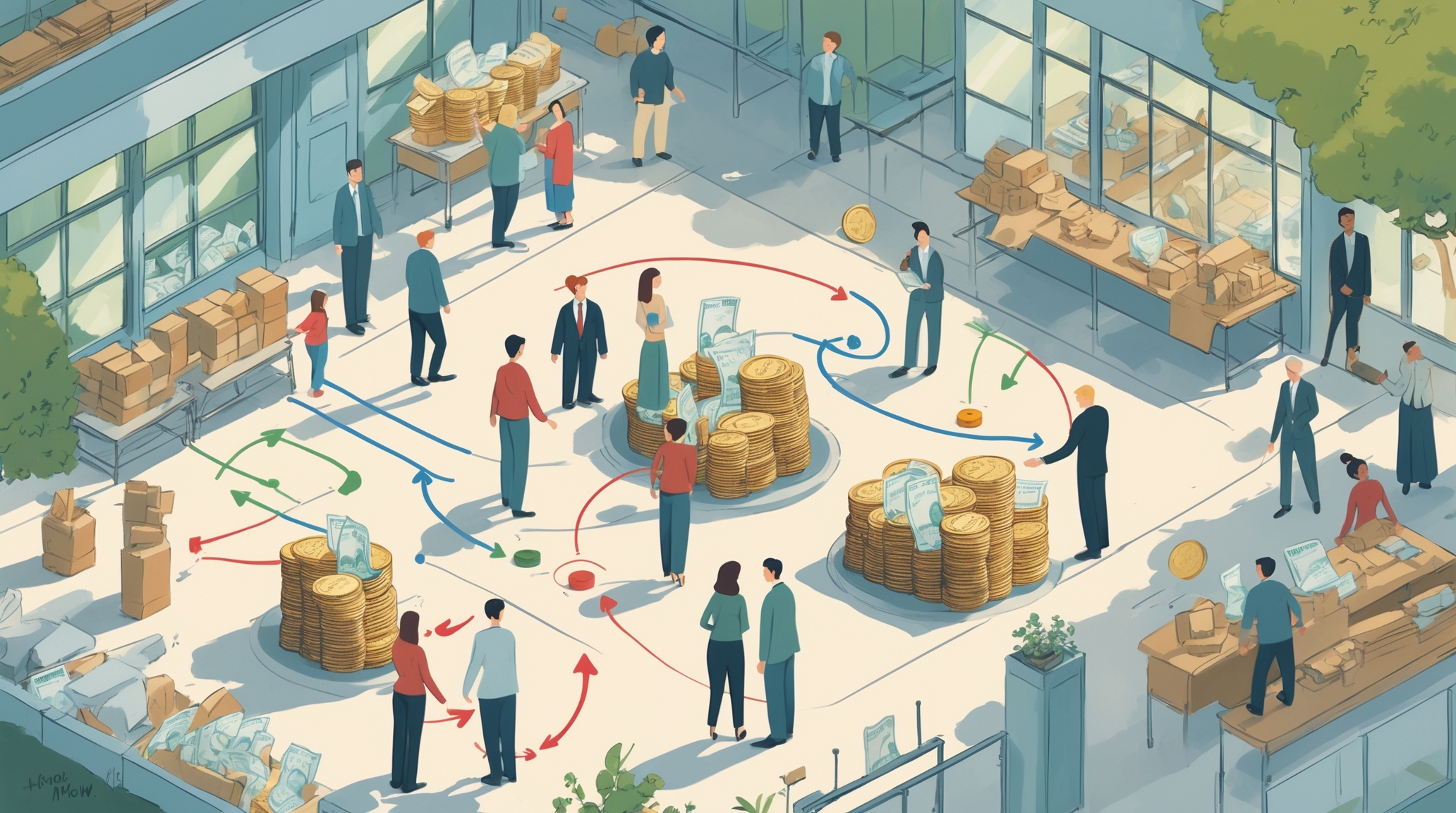
This is what money does when you understand it as a system. It is not just currency sitting in your wallet. It is a signal. A signal about what you can do, what risks you can take, what decisions are available to you. And those signals shape behaviour in ways that ripple far beyond the individual transaction.
Most people think of money as a thing. A physical object. Notes and coins. Or numbers in an account. And in one sense, that is true. Money is a medium of exchange. You trade it for goods and services. But that is only the surface. Underneath, money is a system of signals that coordinates behaviour across millions of people who will never meet.
Let me give you an example. Imagine two people. Both earn the same salary. Both have the same expenses. But one of them has access to credit, and the other does not. Their behaviour will be completely different.
The person with credit can smooth out their spending. If an unexpected bill arrives, they can pay it now and spread the cost over time. They can invest in something that will pay off later, like education or starting a business, because they do not need the cash upfront. They can take risks because they have a buffer. Credit gives them options. And options change decisions.
The person without credit has no buffer. Every decision has to be made with the cash they have right now. If an unexpected bill arrives, something else does not get paid. They cannot invest in the future because they cannot afford to wait for the return. They cannot take risks because there is no safety net. Their decision-making is constrained, not by ability or ambition, but by access to liquidity.
Same income. Different system. Different outcomes.
This is what liquidity does. Liquidity is the ease with which you can access money when you need it. And it is one of the most powerful forces in financial systems because it does not just enable transactions. It shapes what people believe is possible.
Think about a housing market. When banks are lending freely, liquidity is high. People who could not previously afford to buy a house suddenly can. Not because their income went up, but because credit became available. So more people enter the market. Demand rises. Prices go up. And because prices are going up, more people want to buy before they rise further. The signal that housing is a good investment becomes self-reinforcing. Liquidity created the conditions for a boom.
Now imagine the opposite. Banks tighten lending. Liquidity dries up. People who want to buy cannot get a mortgage. Demand falls. Prices drop. And because prices are dropping, people who were thinking of buying decide to wait. The market stalls. Same houses. Same people. Different liquidity. Different outcome.
Liquidity is not neutral. It does not just facilitate what people were already going to do. It changes what they do. And because everyone in the system is responding to the same signals at the same time, those changes amplify.
Here is another layer. Money does not just signal what you can afford. It signals what other people think you can afford. And that matters because trust is a currency in itself.
If you walk into a bank and ask for a loan, the bank does not just look at your income. It looks at your credit history. Your assets. Your existing debts. It is reading signals. Signals about whether you are likely to repay. And if the signals are good, you get the loan. If they are not, you do not. But here is the twist. The signals the bank is reading were created by the same system. Your credit score exists because of previous access to credit. Your assets exist because of previous liquidity. The system is recursive. Access creates signals. Signals create access.
This is why people who already have money find it easier to get more. Not because they are better at managing it, though they might be. But because the system reads their existing wealth as a signal of low risk. And low risk gets rewarded with more access. Meanwhile, people who need money the most are seen as high risk, so they get charged more for it, or denied it entirely. The system amplifies inequality, not through intention, but through structure.
Now let me introduce a concept that most people experience but rarely name. The velocity of money. This is how fast money moves through the system. How quickly it changes hands. And it matters because money that moves creates more activity than money that sits still.
Imagine you get paid. You spend that money on groceries. The grocer uses it to pay their supplier. The supplier uses it to pay their staff. That same money has now facilitated four transactions. It has created economic activity far beyond the original exchange. This is velocity. And when velocity is high, the economy feels active. Shops are busy. People are spending. Jobs are created.
But when velocity drops, everything slows. People hold onto money instead of spending it. Maybe they are uncertain about the future. Maybe they are paying down debt. Either way, the money stops moving. Shops see fewer customers. Businesses cut costs. Jobs disappear. Same amount of money in the system. Different velocity. Different result.
And here is where it gets interesting. Velocity is driven by confidence. If people believe the future will be stable, they spend. If they believe it will be uncertain, they save. And because everyone is reading the same signals, confidence becomes contagious. High confidence creates high velocity. High velocity creates growth. Growth reinforces confidence. It is a reinforcing loop. Until something breaks it.
The same loop works in reverse. Low confidence creates caution. Caution reduces velocity. Low velocity reduces growth. Slow growth undermines confidence. The loop spirals downward. And once it starts, it is very hard to stop because the signals are all pointing in the same direction.
This is why central banks exist. They are trying to manage the signals. When confidence is low and velocity is dropping, they lower interest rates. Cheaper credit is a signal. It tells people and businesses that borrowing is less risky. That investment makes sense. That spending is encouraged. The hope is that the signal changes behaviour. And if enough people respond, velocity picks up and the loop reverses.
But it does not always work. Because signals only matter if people trust them. And trust is fragile. If people believe the situation is bad enough that even cheap credit will not help, they ignore the signal. The money sits still. Velocity stays low. And the central bank's intervention fails to gain traction.
This is what happened in many economies after the financial crisis of two thousand eight. Interest rates were cut to near zero. Credit was available. But people and businesses were not borrowing. They were repairing balance sheets. Paying down debt. Rebuilding savings. The signal was there, but the behaviour did not follow because the context overwhelmed the incentive.
Money, in other words, is not just about the amount. It is about access, liquidity, confidence, and velocity. It is about the signals those things send and the behaviour those signals create. And because the system is interconnected, a change in one signal ripples outward and affects everything else.
Here is the part that most people miss. The signals are not objective. They are interpretations. Two people can look at the same economic data and read completely different signals. One sees opportunity. The other sees risk. And both will act accordingly. Their behaviour, multiplied across millions of people, shapes the reality that everyone else is responding to.
This is why markets are not rational. They are not calculating machines that process information and arrive at correct answers. They are networks of people reading signals, interpreting them through their own lens, and acting on incomplete information. And because everyone is watching everyone else, the signals feed back into themselves. Optimism creates rising prices. Rising prices signal optimism. The loop reinforces. Until it does not.
Money is not neutral. It is not a passive tool that sits quietly until you need it. It is an active system that sends signals, shapes behaviour, and creates feedback loops that amplify in both directions. Wealth and poverty. Boom and bust. Confidence and collapse. All of them are products of the same system responding to the signals it generates.
And if you want to understand why financial systems behave the way they do, you cannot just look at the currency. You have to look at the signals. Because the signals are doing the work.
And the signals, more often than not, are telling people to do things that make perfect sense individually but create chaos collectively.
That is what the next article is about.