Personal Navigation Strategies
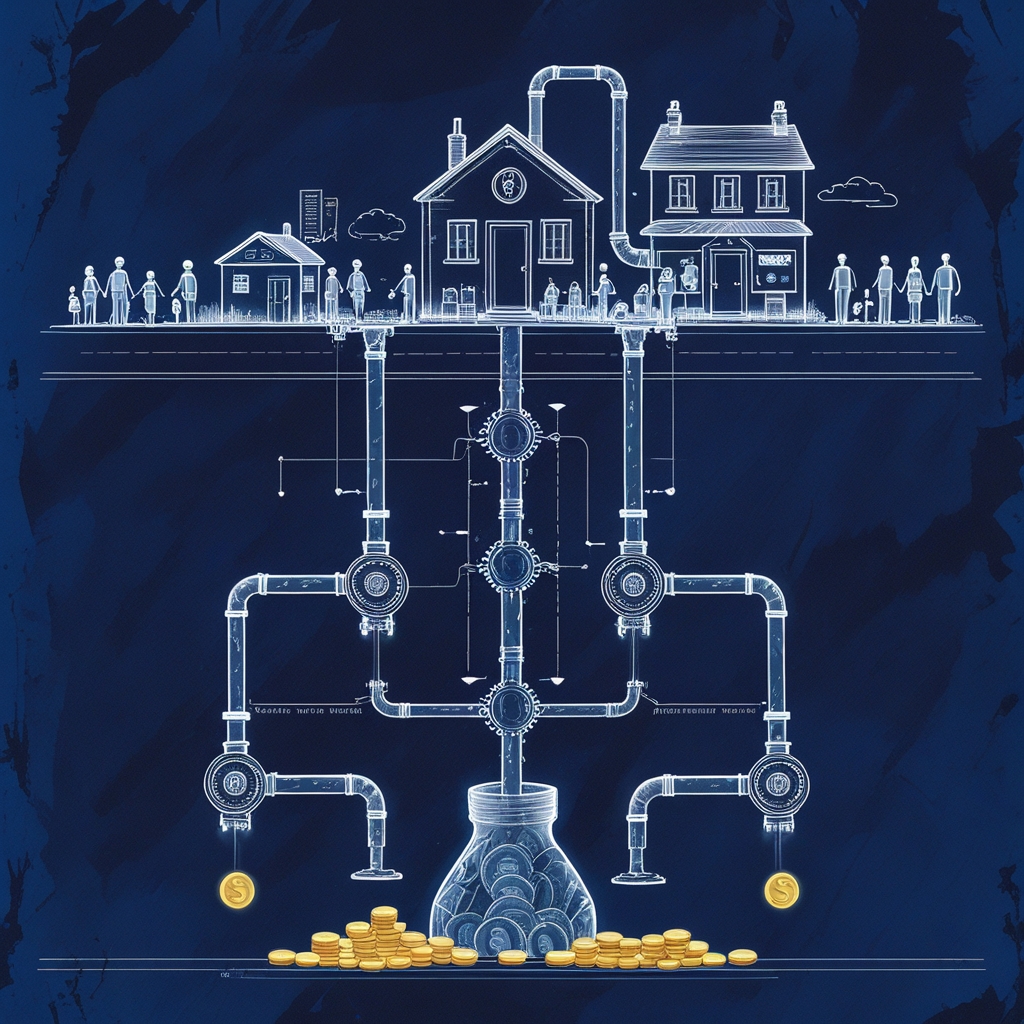
You cannot change the financial system. You do not have the authority. You do not have the resources. And even if you did, the system is designed to resist exactly that kind of intervention. It is too large, too complex, too interconnected, and too deeply embedded in the structure of the economy to be reshaped by individual action.
But that does not mean you are powerless. It means your power is not where you think it is. You cannot change the system. But you can change your position within it. And your position determines how the system affects you.
This is not about getting rich. This is not about beating the market. This is about understanding the machinery well enough to avoid being crushed by it. Because the system will keep doing what it does. Expanding credit. Inflating assets. Building leverage. And then, periodically, collapsing. Your job is not to stop that cycle. Your job is to make sure that when it happens, you are standing in the right place.
Let me show you how.
The first thing to understand is liquidity. Liquidity is your ability to access money when you need it. Not money you might have in the future. Not money tied up in assets. Money you can get your hands on right now. And liquidity is the difference between weathering a disruption and being destroyed by it.
Think about what happens when income stops. A job loss. A business failure. An unexpected crisis. If you have liquidity, you have time. Time to find new work. Time to restructure. Time to make decisions without panic. If you do not have liquidity, you have pressure. Immediate, crushing pressure. Bills still need to be paid. Rent is still due. Food still costs money. And if you cannot access cash, you start making bad decisions. You take the first job offer, even if it is terrible. You sell assets at the worst possible time. You borrow at punishing rates just to survive the week.
Liquidity is a buffer. And buffers are what allow you to make good decisions under pressure. So the first rule of navigating the financial system is: build liquidity. Keep cash. Not everything. But enough. Enough to cover three months of expenses. Six if you can manage it. This is not an investment. It is insurance. It will not grow. It might even lose value to inflation. But it will be there when you need it. And that is worth more than any return.
The system punishes people without liquidity. It charges them more. It gives them fewer options. It forces them into decisions that make their situation worse. Liquidity is the thing that stops that spiral before it starts.
The second thing to understand is debt. Debt is leverage. And leverage amplifies. On the way up, it amplifies gains. On the way down, it amplifies losses. And the problem with leverage is that you do not control which way the system moves. You can make all the right decisions, manage your finances carefully, and still get hit by something outside your control. A recession. A market crash. A policy change. And if you are leveraged when that happens, you are exposed.
So the second rule is: use debt carefully. Not never. Carefully. Debt for a home, if the payments are manageable and you plan to stay, can make sense. Debt for education, if it leads to employment that justifies the cost, can make sense. Debt for a business, if the returns are real and the risk is calculated, can make sense. But debt for consumption does not make sense. Debt that you cannot service if your income drops does not make sense. Debt taken on because the system makes it easy does not make sense.
The system wants you to borrow. Banks profit from it. The economy grows from it. So credit is offered freely. Mortgages at high multiples of income. Credit cards with limits that exceed what you earn in months. Loans for things you do not need. And the system makes it feel normal. Everyone is doing it. Everyone is leveraged. But that does not make it safe. It makes it common. And common risks are still risks.
The rule is this. If losing your income means losing your home, you are over-leveraged. If a small increase in interest rates means you cannot make payments, you are over-leveraged. If you are borrowing to pay off other borrowing, you are over-leveraged. Leverage is a tool. But tools can hurt you if you do not know how to use them.
The third thing to understand is asset exposure. Assets are how you store value over time. But not all assets behave the same way. And the system does not treat them the same way. Some assets are liquid. You can sell them quickly without losing much value. Cash. Stocks in large companies. Government bonds. Others are illiquid. You cannot sell them quickly, or if you do, you take a significant loss. Property. Small business equity. Collectibles.
Illiquid assets are fine if you do not need the money. But if you need the money and your wealth is tied up in something you cannot sell, you have a problem. So the third rule is: diversify your liquidity. Do not put everything in one type of asset. Do not lock all your wealth in property and assume you can always access it. Because when you need to access it is often exactly when everyone else is trying to do the same thing. And that is when liquidity disappears.
The system also treats different assets differently during crises. Equities can lose half their value in months. Property can become unsellable. But cash, while it might lose value to inflation, does not disappear. Bonds issued by stable governments do not default. So having some exposure to assets that hold value even when everything else is collapsing is not about maximizing return. It is about minimizing regret.
The fourth thing to understand is income stability. The financial system assumes your income is stable. Mortgages are calculated on the assumption that you will keep earning what you earn now. Credit limits are set based on current income. But income is not stable. Jobs end. Industries decline. Health fails. And when income drops, every financial commitment you made based on the old income becomes a burden.
So the fourth rule is: do not optimize for your peak. Optimize for your average. If your income is variable, do not borrow based on your best year. Borrow based on what you can afford in a bad year. If your income depends on a single source, recognize that as a risk. And if you can, build alternatives. Not because you expect to lose your job. But because the system does not care whether you expected it or not.
The fifth thing to understand is fees and interest. The financial system extracts value at every point of contact. Transaction fees. Management fees. Interest on loans. Overdraft charges. Currency conversion fees. Insurance premiums. Every interaction costs something. And those costs compound. A two percent annual fee on an investment does not sound like much. But over thirty years, it can consume a third of your returns. High-interest debt does not just cost you the amount you borrowed. It costs you multiples of that over time.
So the fifth rule is: minimize unnecessary costs. Do not pay fees for services you do not need. Do not carry high-interest debt if you can avoid it. Do not accept the default option just because it is easy. The system profits from inertia. From people who do not check. Who do not compare. Who do not ask. Every fee you avoid is money that stays with you instead of being extracted by an intermediary.
The sixth thing to understand is that the system runs in cycles. Boom and bust. Expansion and contraction. It always has. It always will. And your position in the cycle determines whether you are building wealth or losing it. If you buy assets at the peak, when prices are high and confidence is strong, you are buying into a cycle that is about to reverse. If you sell assets at the bottom, when prices are low and fear is high, you are locking in losses.
So the sixth rule is: do not follow the crowd. The crowd buys at the top and sells at the bottom. Because the crowd is driven by emotion. By fear and greed. By the belief that this time is different. It is never different. The cycle always turns. And the people who do well are the people who recognize where they are in the cycle and act accordingly. Not by trying to time the market perfectly. But by not doing the obviously stupid thing. Like borrowing heavily to buy assets when prices are at record highs. Or selling everything in a panic when prices have already collapsed.
The seventh thing to understand is risk. The system hides risk. It packages it. Rebrands it. Sells it as safe. Mortgage-backed securities were sold as low-risk right up until they collapsed. Complex financial products are marketed as sophisticated, as if sophistication equals safety. It does not. Complexity hides risk. It does not eliminate it.
So the seventh rule is: if you do not understand it, do not buy it. If someone is selling you something and the explanation takes more than five minutes, or uses jargon you do not recognize, walk away. The system profits from complexity. You do not. Simple products are easier to evaluate. Easier to exit. Easier to understand when something is going wrong. Complexity is not your friend.
The eighth thing to understand is that you are not the priority. When the system is in trouble, it will protect itself. Not you. Institutions will be bailed out. Markets will be stabilized. But individuals will be left to absorb the consequences. You will not get a rescue. You will not get special treatment. You will get the terms you agreed to, enforced to the letter, even if those terms were written when the world looked completely different.
So the eighth rule is: plan for the system to fail you. Not out of paranoia. Out of realism. Have a plan for what happens if your bank restricts access to your funds. If your investments lose half their value. If credit becomes unavailable. If your income stops. You do not need to prepare for the apocalypse. You just need to prepare for disruption. Because disruption is not rare. It is periodic. And it always catches people by surprise.
None of this will make you immune. You are still inside the system. You are still subject to forces larger than yourself. A severe enough crisis will hurt you no matter how well prepared you are. But preparation is the difference between being hurt and being destroyed. Between losing some wealth and losing everything. Between having options and having none.
The system will keep expanding credit. It will keep inflating asset prices. It will keep building leverage. And it will keep collapsing. That is what it does. You cannot stop it. But you can see it. And if you can see it, you can position yourself so that when it moves, you move with it instead of being crushed by it.
The system is not your enemy. It is not your friend. It is a machine. And machines do not care. They just run. Your job is to understand how the machine works and to stand somewhere other than directly in its path.
Because the people who do well in financial systems are not the ones who control them. They are the ones who see them clearly. Who understand the incentives. Who recognize the cycles. Who build buffers. Who avoid excessive leverage. Who do not follow the crowd. Who stay liquid when everyone else is stretched. Who stay calm when everyone else is panicking.
You do not need to beat the system. You just need to not let it beat you.
And that starts with seeing it for what it is. Not a fair playing field. Not a meritocracy. But a structure. A structure that distributes risk and reward in predictable ways. A structure that you can navigate if you understand how it works.
The system will not change. But your position within it can. And your position is the only thing you control.
So control it.