Who Benefits and Who Pays
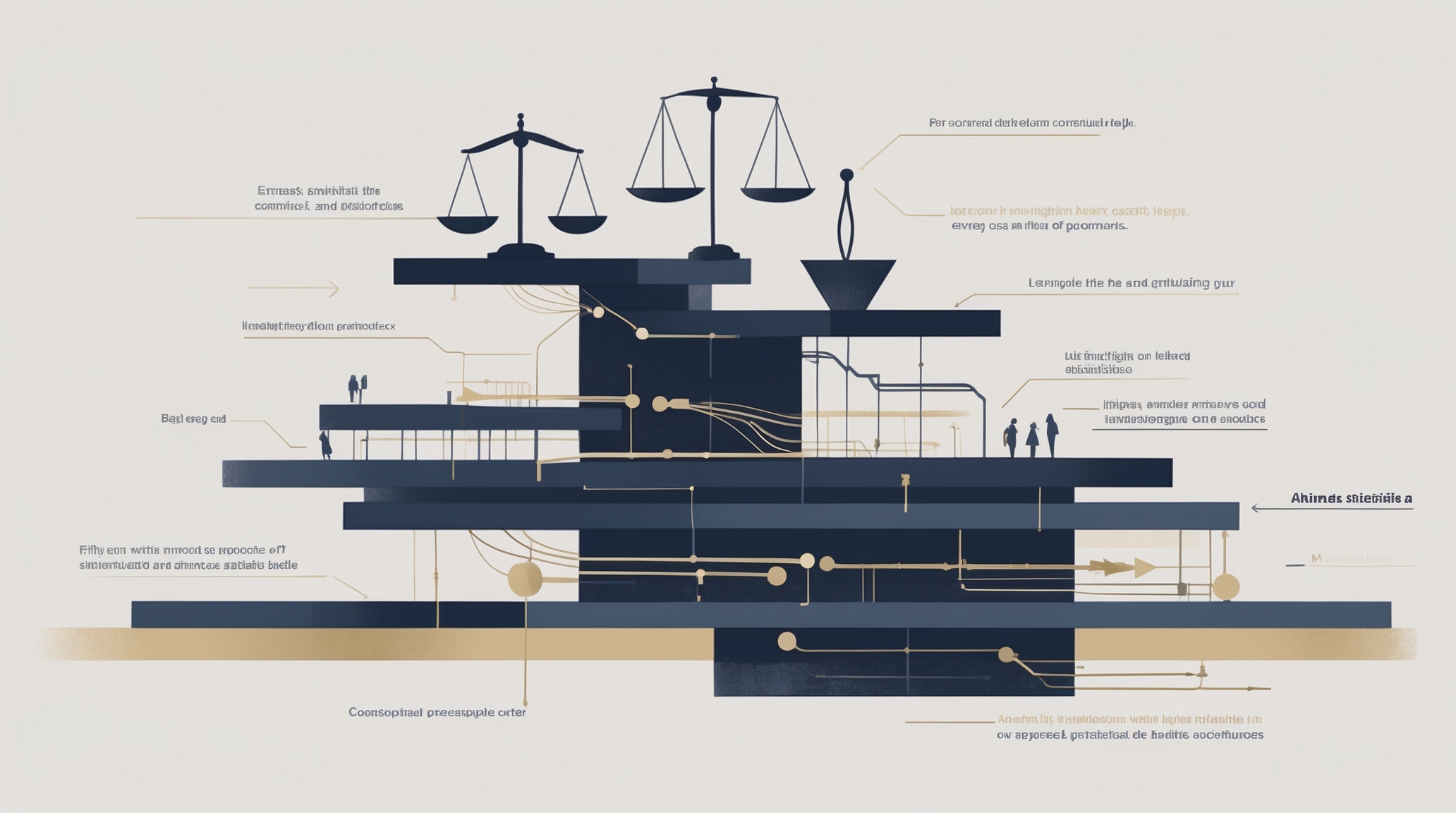
There is a moment in every financial crisis when two very different conversations happen at the same time.
In one room, policymakers are deciding which institutions to rescue. Banks that made reckless bets. Funds that over-leveraged. Companies that borrowed beyond their means. The conversation is urgent. If these institutions fail, the argument goes, the entire system collapses. Jobs disappear. Savings evaporate. The economy seizes. So the decision is made. Billions, sometimes trillions, are deployed. The institutions are saved.
In another room, or more accurately, in millions of homes, a different conversation is happening. People who took out mortgages they were told they could afford are now facing foreclosure. Small business owners who relied on credit to keep the doors open are being refused new loans. Workers are being laid off because the companies they work for are cutting costs. And there is no rescue for them. No bailout. No emergency intervention. Just the slow, grinding consequences of a system that has stopped working in their favor.
This is not an accident. This is not a failure of fairness. This is the system working exactly as it is designed to work. Because financial systems do not distribute gains and losses evenly. They distribute them structurally. And the structure favors certain positions over others.
Let me show you how.
The first thing to understand is that financial systems create two broad categories of participants. Asset owners and wage earners. And these two groups experience the same economic events in completely opposite ways.
Asset owners hold things. Property. Stocks. Bonds. Businesses. Their wealth is tied to the value of what they own. Wage earners, on the other hand, rely on income. They trade time and labor for money. They do not own assets that appreciate. They earn, they spend, and they save what is left. If anything is left.
Now think about what happens during inflation. Prices rise. For wage earners, this is painful. The cost of food, rent, energy, everything goes up. But wages do not rise at the same pace. So their purchasing power falls. They are getting poorer in real terms, even if their paycheck stays the same.
For asset owners, inflation is different. Yes, the price of goods rises. But so does the value of their assets. Property prices go up. Stock prices often go up because companies can charge more for their products. The debt they owe, if they have any, becomes cheaper in real terms because they are repaying it with money that is worth less. Inflation erodes the value of cash, but it inflates the value of assets. So asset owners, on balance, often benefit.
The reverse is also true. During deflation, when prices fall, wage earners might see the cost of living drop. But they also see wages stagnate or fall. Unemployment rises. And any savings they have are worth more, but only if they have savings. Most do not. Meanwhile, asset owners see the value of their holdings drop. But they also see the real value of any cash they hold increase. And if they have access to credit, they can buy assets cheaply during the downturn and profit when values recover.
The point is not that one group always wins and the other always loses. The point is that the same economic event affects them differently. And the structure of the financial system is built around assets, not wages. So the levers that policymakers pull, the interventions they make, are designed to stabilize asset values. Not to protect wage earners.
Here is why. The financial system runs on collateral. Banks lend against assets. Mortgages are secured by property. Business loans are secured by equipment, inventory, real estate. If asset values collapse, the collateral backing those loans disappears. Banks face losses. Lending freezes. The system seizes.
So when a crisis hits, the priority is to stop asset values from collapsing. That means bailing out banks. Buying up bad debts. Injecting liquidity. Dropping interest rates to make borrowing cheap. All of this is designed to prop up asset prices. And it works. Asset values stabilize. The financial system is saved.
But the people who do not own assets see none of that benefit. Lower interest rates do not help if you cannot get a loan. Stabilized property prices do not help if you are renting. A recovered stock market does not help if you do not own stocks. The intervention saved the system, but it did not save you.
This creates a structural divergence. After a crisis, asset owners recover quickly. Their portfolios rebound. Their property values rise again. But wage earners take years to recover, if they recover at all. Unemployment stays high. Wages stay flat. Savings that were wiped out do not come back. The gap between those who own assets and those who do not widens. Not because of individual merit. But because the system is designed to rescue one and not the other.
Now layer onto this the question of access to credit. Because credit is not distributed evenly. It is distributed based on risk. And risk, in the eyes of the financial system, is determined by what you already have.
If you have assets, you can borrow cheaply. You can get a mortgage at a low interest rate because the property is collateral. You can get a business loan because you have equity to secure it. You can access lines of credit because the bank trusts that you have something to fall back on. And because you can borrow cheaply, you can invest. Buy more property. Expand your business. Leverage your existing wealth to generate more wealth. The system rewards you for already having money.
If you do not have assets, credit is expensive. If you can get it at all. You pay higher interest rates because you are seen as higher risk. You cannot get a mortgage because you do not have a deposit. You cannot get a business loan because you have no collateral. And if you need money urgently, you turn to payday loans, credit cards, overdrafts, all of which charge extortionate rates. The system penalizes you for not having money.
This is not moral judgment. It is mechanical. The system is optimizing for its own survival. Lending to people with collateral is safer. So that is where the money flows. But the effect is that access to cheap credit becomes a structural advantage. And that advantage compounds. The more you have, the cheaper it is to borrow. The cheaper it is to borrow, the more you can invest. The more you invest, the more you accumulate. The loop reinforces.
Meanwhile, those without assets are stuck paying more for less. They are charged higher rates for smaller amounts. They cannot leverage their way into wealth because they have nothing to leverage. And the gap grows.
Now add in the question of bailouts. Because bailouts are not random. They follow a pattern. And the pattern is clear. Institutions get rescued. Individuals do not.
When a bank fails, it threatens the system. So the bank gets saved. When a major corporation is on the brink of collapse, it employs thousands of people, so it gets rescued. When a hedge fund that made reckless bets is about to go under, but its failure would trigger a cascade of defaults, it gets a backstop. The argument is always the same. Too big to fail. Too interconnected to let collapse. The system must be protected.
But when an individual fails, there is no rescue. When someone loses their home because they cannot make mortgage payments, there is no bailout. When a small business goes under because it cannot access credit, there is no intervention. When a worker loses their job and cannot pay their bills, there is no safety net, or the safety net is threadbare. The system does not care about individual survival. It cares about systemic survival. And systemic survival means protecting the institutions and the assets that hold the system together.
This creates a moral hazard. Institutions know they will be rescued. So they take bigger risks. They leverage more. They chase higher returns. Because the upside is theirs, but the downside is socialized. If the bet pays off, they profit. If it does not, the taxpayer covers the loss. The structure encourages recklessness at the institutional level while punishing it at the individual level.
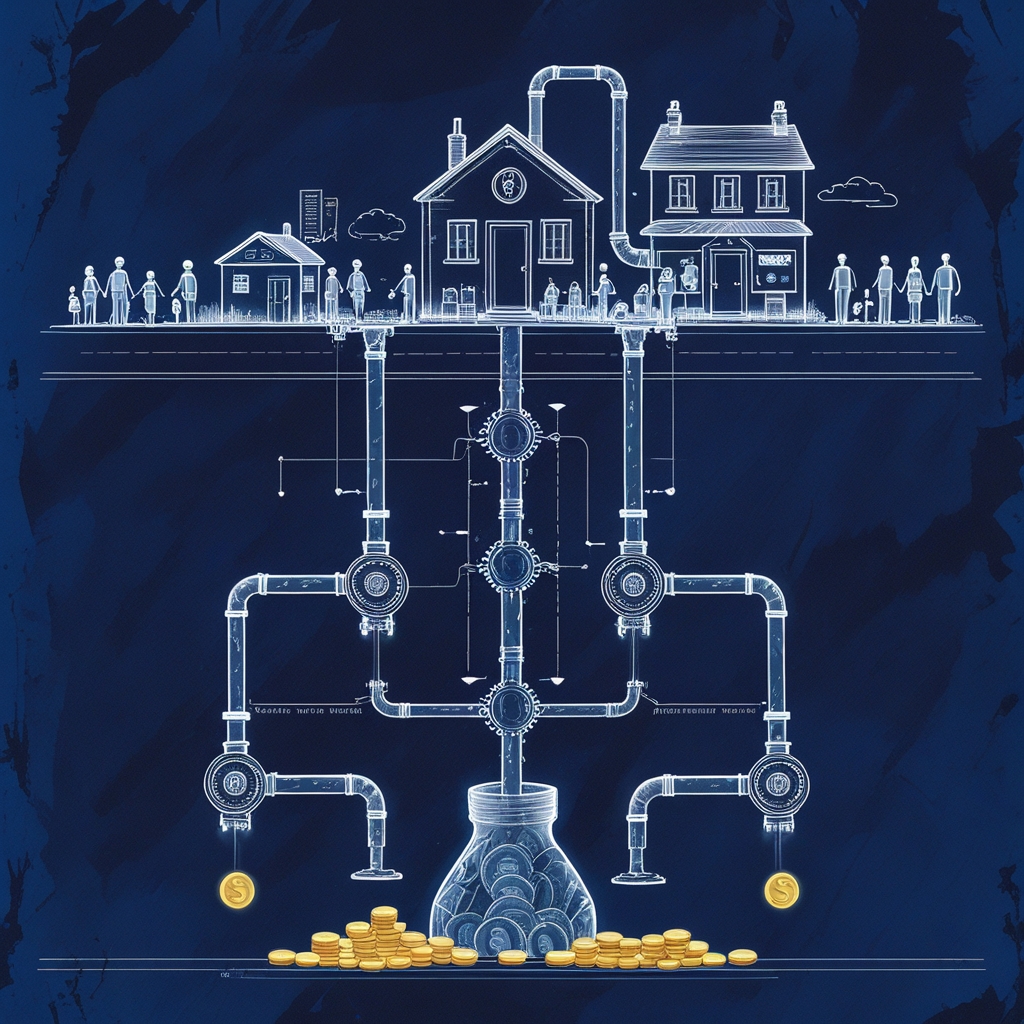
And here is the final piece. Financial intermediation. The cost of moving money through the system. Every time money changes hands, someone takes a cut. Banks charge fees. Investment funds charge management fees. Payment processors charge transaction fees. Brokers charge commissions. Insurers charge premiums. The system is built on intermediation. And intermediation is profitable.
The people who own or work for these intermediaries extract value simply by facilitating transactions. They do not produce anything. They do not create wealth. They move it. And they take a percentage. This is rent. Economic rent. And it accumulates. Every mortgage payment includes interest. Every investment return is reduced by fees. Every transaction has a cost. And those costs flow to the intermediaries.
For people with large amounts of capital, these costs are a small percentage. Annoying, but manageable. For people with small amounts of capital, these costs are proportionally huge. A two percent management fee on a million-pound portfolio is twenty thousand pounds. Expensive, but the portfolio still grows. A two percent fee on a ten-thousand-pound portfolio is two hundred pounds. And for someone living paycheck to paycheck, two hundred pounds is significant.
So the structure of financial intermediation extracts more, proportionally, from those with less. And it funnels that extraction upward to those who own or control the intermediaries. This is not theft. It is the design. The system runs on intermediation. And intermediation has a cost. But that cost is not borne evenly.
So who benefits? Asset owners. Those with access to cheap credit. Institutions that are too big to fail. Intermediaries who extract rent from every transaction. Those positioned within the structure to capture value rather than create it.
Who pays? Wage earners. Those without assets. Individuals who face high borrowing costs. Small businesses that cannot access capital. People who are subject to the consequences of systemic failure without the protection of systemic rescue.
This is not a conspiracy. This is not anyone's master plan. This is the output of a structure that prioritizes stability over fairness. That rescues institutions over individuals. That rewards ownership over labor. That distributes risk downward and rewards upward.
The system works. Just not for everyone. And the people it works for are the people it was designed to protect. Not because they are more deserving. But because the structure depends on them. Their assets are the collateral. Their institutions are the architecture. Their stability is the system's stability.
Everyone else is along for the ride. And when the ride gets rough, they are the ones who pay the fare.
The next article will show you why, even when the problems are obvious, even when the risks are clear, regulation does not keep pace. Why the rules always lag behind the reality. And why the system keeps producing crises despite every promise that this time will be different.
Because the machinery does not want to be controlled. And the people who benefit from it have every incentive to keep it running exactly as it is.