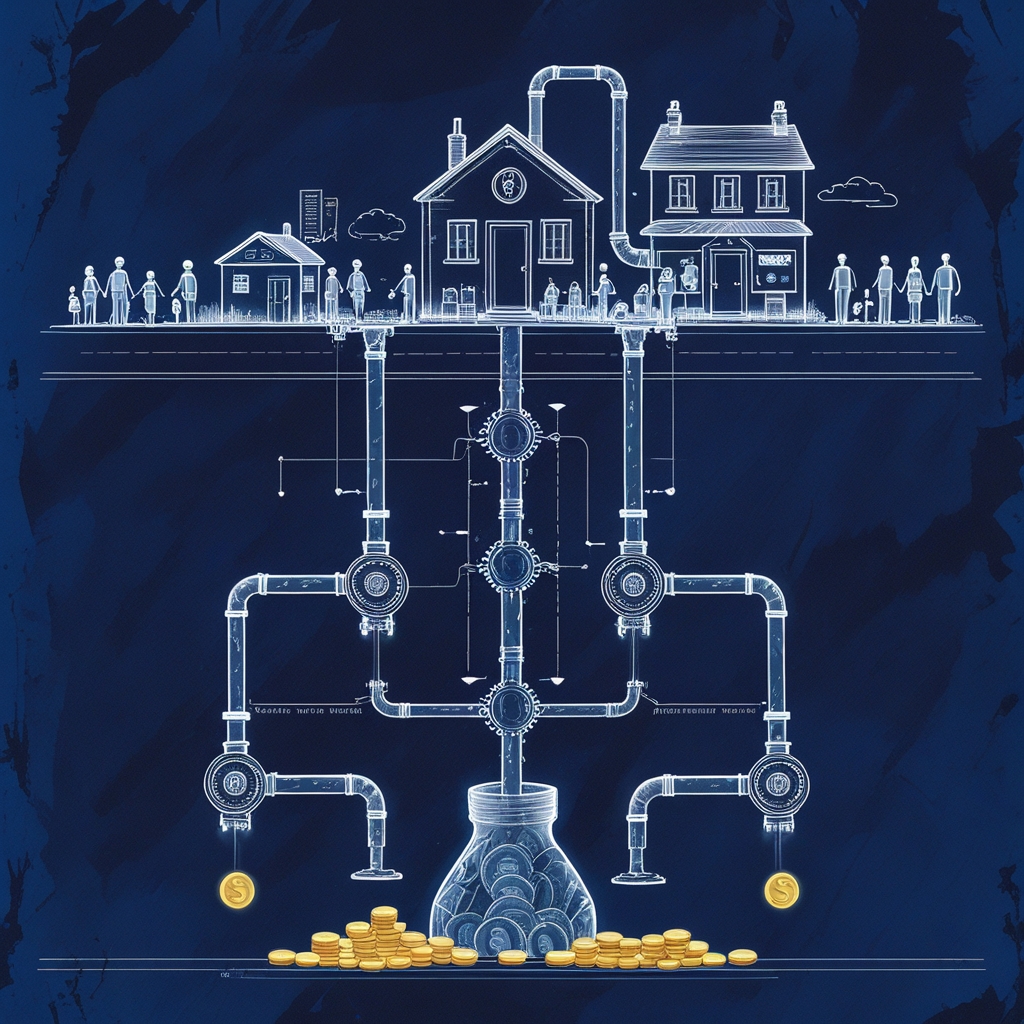
Why Regulation Always Lags

There is a pattern that repeats after every financial crisis. The wreckage is examined. Investigations are launched. Reports are written. And everyone agrees that this must never happen again. New rules are proposed. Stricter oversight. Tougher penalties. Greater transparency. The regulations are debated, negotiated, and eventually passed. Politicians declare victory. The system, they say, is now safe.
And for a while, it holds. The new rules are enforced. Institutions comply, or at least appear to. The memory of the crisis is fresh. Everyone is cautious. But then time passes. The economy recovers. Profits return. And slowly, quietly, the pressure builds to relax the rules. They are too restrictive, the argument goes. They are stifling innovation. Holding back growth. Making it harder to compete. So exemptions are granted. Loopholes are found. Enforcement is weakened. And by the time the next crisis arrives, the regulations that were supposed to prevent it have been hollowed out.
This is not failure. This is the system working exactly as it is designed to work. Because regulation does not operate in a vacuum. It operates inside a structure. And that structure ensures that regulation always lags behind the reality it is trying to control.
Let me show you why.
The first reason regulation lags is speed. Financial innovation moves fast. New products. New strategies. New ways of packaging risk. The people creating these innovations are highly paid, highly motivated, and operating in competitive markets. They are rewarded for finding an edge. For exploiting gaps. For doing something no one else has done yet. And they do not wait for permission.
A new financial instrument is created. It spreads. It generates profit. And by the time regulators notice it exists, it is already embedded in the system. Thousands of contracts have been signed. Trillions of dollars are tied up in it. Unwinding it now would cause disruption. So the regulators are left playing catch-up. Trying to understand what the product does. How it is being used. What risks it creates. And by the time they have figured it out and written rules to govern it, the market has moved on. A new product has emerged. And the cycle begins again.
This is not because regulators are slow or incompetent. It is because the incentive structures are misaligned. The innovators are rewarded for speed. The regulators are constrained by process. Writing a regulation takes time. It requires consultation. Evidence. Legal review. Political approval. All of that happens while the market is sprinting ahead. The regulator is trying to catch a train that left the station months ago.
And here is the deeper problem. Regulators can only regulate what they understand. But financial products are often designed to be opaque. Not out of malice, necessarily, but because complexity is valuable. A simple product is easy to replicate. A complex one creates a moat. It requires expertise to price. Expertise to manage. Expertise to understand. And that expertise is expensive. So the people who create these products have an information advantage. They understand the risks better than anyone else. And they do not have an incentive to make those risks easy to see.
By the time regulators understand the product well enough to regulate it, the people who created it understand it better. They know where the weaknesses in the regulation are. They know how to structure around it. How to comply with the letter of the law while violating the spirit. This is not illegal. This is sophisticated. And it is exactly what you would expect in a system where the regulated entities employ the best legal and financial minds to find every loophole.
Now add in regulatory capture. This is the process by which the people being regulated end up influencing the regulators. And it happens in several ways.
The most obvious is lobbying. Financial institutions spend enormous amounts of money on political influence. They fund campaigns. They hire lobbyists. They commission research. And they make the case, repeatedly and persuasively, that heavy regulation is bad for the economy. Bad for jobs. Bad for growth. Bad for competitiveness. Some of this is self-serving. But some of it is true. Financial systems do enable growth. Credit does create opportunity. So the argument is not entirely dishonest. It is just one-sided.
And because the argument is made loudly, consistently, and with significant resources behind it, it shapes the conversation. Politicians who propose strict regulation are accused of being anti-business. Of not understanding how markets work. Of risking jobs and investment. And many politicians, who genuinely want the economy to grow, listen. They soften the rules. They grant exemptions. They delay implementation. Not because they are corrupt, but because they have been convinced that this is the reasonable thing to do.
Then there is the revolving door. Regulators are often recruited from the industry they are meant to regulate. Because who else has the expertise? And after they leave the regulatory body, they often return to the industry. Because that is where the high-paying jobs are. This creates a conflict. Not a blatant one. Not a conscious one. But a structural one. If you know that your next job might be in the industry you are currently regulating, you are less likely to be harsh. You are more likely to be reasonable. Collaborative. Understanding. And the industry knows this. So they cultivate relationships. They stay friendly. They make the regulator feel like part of the team. And when the time comes to write the rules, the rules are written with the industry's input. Which means the rules are written to be workable. Which often means they are written to be weak.
This is not conspiracy. This is how expertise and incentives interact. And the result is that regulation gets shaped by the people it is meant to constrain.
Now add in the crisis cycle. Every financial crisis produces a wave of regulatory reform. The public is angry. Politicians need to be seen doing something. So rules are tightened. Oversight is increased. Penalties are raised. For a few years, the system is more constrained.
But crises fade from memory. The people who lived through the last one retire. The next generation of bankers did not experience the collapse. They only know the recovery. And to them, the regulations feel like relics. Outdated. Written for a different era. A different set of risks. So the pressure builds to modernize. To update. To make the rules fit the current reality. And modernizing, in practice, often means relaxing.
This is the forgetting cycle. Regulate after the crisis. Relax during the boom. Repeat. The system never stays regulated for long because the memory of why the regulation was needed fades faster than the regulation itself can be enforced.
Here is another problem. Complexity. Financial systems have become so complex that even the people inside them do not fully understand how all the pieces fit together. Products are layered. Risks are sliced and repackaged. Derivatives are built on derivatives. And the models used to price them rely on assumptions that only hold under normal conditions. When conditions become abnormal, the models break. But by the time that becomes obvious, it is too late.
Regulators, who are tasked with overseeing this system, are working with incomplete information. They do not have access to the proprietary models. They do not see the internal risk assessments. They rely on what institutions report. And institutions report what they are required to report. Which is not always the full picture.
So regulators are trying to oversee a system they do not fully understand, using information provided by the entities they are regulating, who have every incentive to present themselves in the best possible light. It is like trying to referee a game where the players write the rulebook and you only get to see the highlights.
And even when regulators do identify a risk, enforcement is a problem. Financial institutions operate globally. They can move operations to whichever jurisdiction has the lightest regulatory touch. If one country tightens rules, capital flows elsewhere. This creates a race to the bottom. Countries that regulate too strictly lose business. Lose tax revenue. Lose jobs. So they are under pressure to stay competitive. Which means staying relaxed.
International coordination is supposed to solve this. Bodies like the Basel Committee set global standards. But those standards are negotiated between countries with different priorities. Some want strict rules. Others want to protect their financial sectors. The result is a compromise. And compromises in regulation usually mean the rules are watered down to the lowest common denominator.
Even when strong international rules are agreed upon, implementation varies. Some countries enforce rigorously. Others give their institutions more leeway. And the institutions, being rational, structure their operations to take advantage of the gaps. They book profits in low-tax jurisdictions. They hold risky assets in lightly regulated ones. They comply with the letter of the law while exploiting its weaknesses.
So what you end up with is a system where regulation is always one step behind. It responds to the last crisis, not the next one. It is shaped by the industry it regulates. It is weakened by political pressure, faded memory, and international competition. And it is trying to govern a system that is more complex, more fast-moving, and more globally interconnected than any regulatory framework can fully capture.
This does not mean regulation is useless. It is not. Regulation does constrain behavior. It does reduce some risks. It does make crises less frequent and, sometimes, less severe. But it does not prevent them. Because the structure of the system ensures that the rules are always catching up. Always incomplete. Always being worked around.
And here is the final twist. The people writing the regulations know this. They are not naive. They understand the limits. But they are operating within constraints. Political constraints. Resource constraints. Jurisdictional constraints. They do what they can with the tools they have. And what they can do is never enough to fully control a system that is designed to resist control.
So the cycle continues. Innovation outpaces regulation. Complexity outpaces comprehension. Lobbying weakens enforcement. Memory fades. Rules are relaxed. Risks build. And eventually, the system breaks again. Not because anyone wanted it to. But because the structure makes it inevitable.
The next article will show you what you can actually do inside this system. Not to fix it. You cannot fix it. But to navigate it. To protect yourself. To understand where the risks are and how to position yourself so that when the system shifts, you are not the one left holding the consequences.
Because the system will keep behaving this way. The question is whether you see it coming.