Why Policy Outcomes Diverge From Policy Intentions
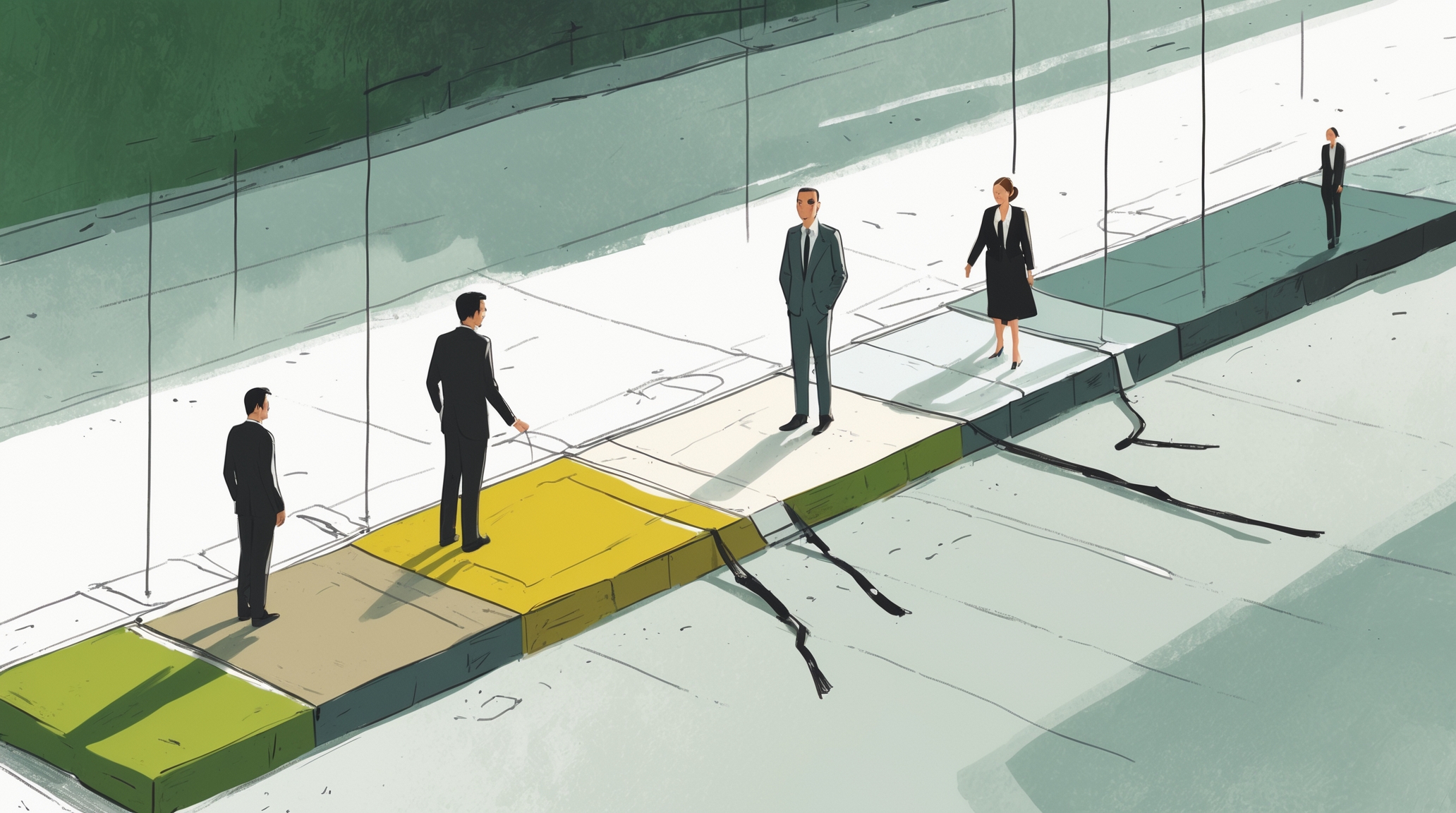
There is a city with a housing problem. Rents are rising fast. People are being priced out. Families who have lived in the area for generations can no longer afford to stay. It is a crisis, and everyone agrees something must be done.
So the city introduces rent control. The policy is clear. Landlords cannot raise rents above a certain percentage each year. The intention is to protect tenants, keep housing affordable, and stop people from being displaced. It is a popular policy. It passes with strong support. Everyone expects it to work.
And at first, it does. Tenants in rent-controlled flats see their costs stabilise. They can stay. The immediate problem is solved. But then, over the next few years, something else starts to happen.
Landlords, facing limits on how much they can charge, stop maintaining properties as well as they used to. Why invest in upgrades if you cannot recoup the cost through higher rent? Some landlords sell up entirely and leave the rental market. Others convert rental properties into short-term holiday lets, which are not covered by the controls. The supply of long-term rental housing shrinks.
Meanwhile, people in rent-controlled flats stay put. Why move when you have a below-market rent locked in? So turnover drops. Fewer properties come onto the market. And for anyone trying to find a new place, the choices get smaller and the competition gets fiercer. Rents for the properties that are available climb even higher because demand is chasing a shrinking supply.
New developers look at the city and decide it is not worth building there. The returns are capped. The risk is high. So new housing does not get built. The shortage deepens. And ten years after rent control was introduced, the city has less housing, higher effective rents for anyone not already locked into a controlled property, and a growing divide between the protected insiders and the struggling outsiders.
The policy had good intentions. It was designed to solve a real problem. But the outcome diverged sharply from what was intended. Not because anyone made a mistake, but because the system responded in ways the policy did not account for.
This is not a story about rent control specifically. It is a story about what happens when policy meets reality. And it happens everywhere.
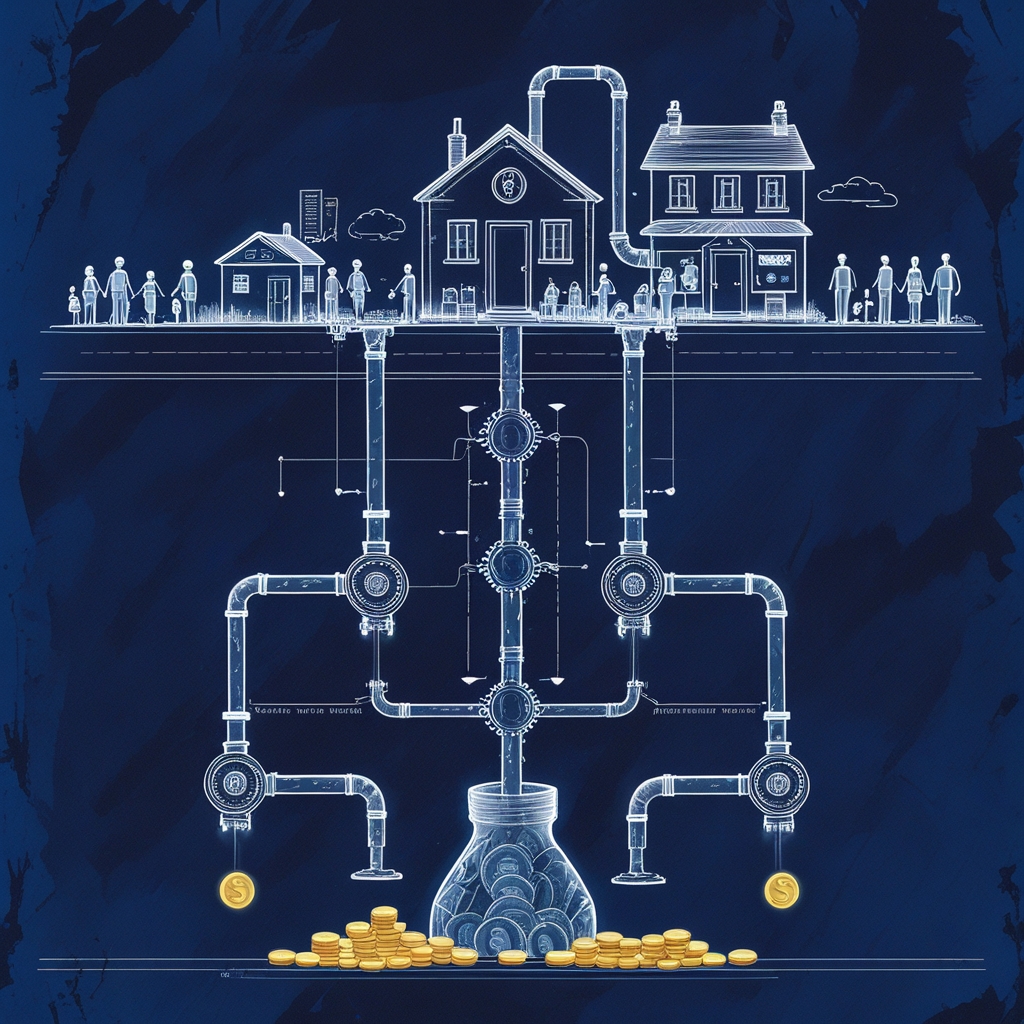
Policy is designed in a room. It is written by people who have studied the problem, consulted experts, modelled scenarios. It is logical. It is well-meaning. But the moment it enters the real world, it enters a system. And systems do not care about intentions. They respond to incentives, they adapt to constraints, and they produce outcomes based on structure, not on what the policy was supposed to achieve.
Here is why this happens so consistently. Policies are designed to solve problems. But problems exist inside systems. And systems are interconnected. When you intervene in one place, the effects ripple outward. Some of those effects are what you wanted. But many of them are not. And often, the unintended effects are larger than the intended ones.
Think about a policy designed to reduce unemployment. The government offers subsidies to companies that hire young people. The intention is clear. Make it cheaper to employ young workers, and companies will hire more of them. Unemployment among young people should fall.
And it does. Companies take the subsidy and hire young workers. The numbers look good. But then you notice something else. Companies that were already planning to hire young people now get paid for something they were going to do anyway. That is dead weight. The subsidy is not creating new jobs, it is just subsidising existing decisions. Meanwhile, some companies start replacing older workers with younger ones because the subsidy makes younger workers cheaper. So youth unemployment falls, but older unemployment rises. The policy shifted the problem, it did not solve it.
Or the subsidy runs out, and the companies let the workers go because they were only hired for the subsidy period. The employment was temporary, not sustainable. The policy created a short-term change that disappeared as soon as the incentive was removed.
None of this was the intention. But all of it was the outcome. Because the system adapted in ways the policy did not predict.
Here is another example. A government wants to reduce carbon emissions. So it introduces a tax on carbon. The logic is simple. Make polluting more expensive, and companies will pollute less. The incentive is clear. The policy makes sense.
But then the system responds. Some companies reduce emissions. That is good. That was the goal. But other companies do something different. They move production to countries where there is no carbon tax. Emissions do not fall, they just move. The policy reduced domestic emissions but increased global emissions. The problem was displaced, not solved.
Or companies pass the cost onto consumers. Prices rise. Low-income households, who spend a larger share of their income on energy, are hit hardest. The policy that was supposed to address climate change has now created a cost-of-living crisis for the people least able to afford it. Political pressure builds. The tax gets watered down or removed. Emissions go back up.
Again, the intention was good. The logic was sound. But the system adapted in ways that undermined the goal.
This is the core insight. Policies assume a static world. They assume that if you change the rules, behaviour will change in the direction you want and then stop. But the world is not static. It is dynamic. People adapt. Organisations adapt. Markets adapt. And they do not adapt in neat, predictable ways. They adapt to optimise around the new rules. Sometimes that aligns with the policy goal. Often, it does not.
Here is why. Policies focus on one variable. Reduce rents. Increase employment. Cut emissions. But that one variable is connected to a dozen others. And when you push on one, the others push back. The system is a web, and pulling one thread tightens others in ways you did not anticipate.
Rent control pulls on the supply thread. Employment subsidies pull on the age and wage threads. Carbon taxes pull on the competitiveness and cost threads. Each intervention creates a cascade of adjustments throughout the system. And many of those adjustments work against the original goal.
There is also the problem of delays. Policies are judged quickly, but their effects unfold slowly. A policy introduced this year might not show its full consequences for five or ten years. By that time, the political landscape has changed. New priorities have emerged. And the slow-building problems created by the original policy are attributed to something else entirely.
Think about financial deregulation. It was introduced in many countries during the nineteen eighties and nineties. The intention was to make markets more efficient, increase competition, and drive growth. And for a while, it worked. Growth accelerated. Markets boomed. But the delayed consequence was a build-up of systemic risk that eventually triggered the financial crisis of two thousand eight. The policy's negative effects took decades to materialise. By the time they did, the people who designed the policy were long gone, and the crisis was blamed on everything except the structure that made it possible.
Or think about healthcare reforms that focus on reducing waiting times. Hospitals respond by prioritising speed. Appointments get shorter. Patients are moved through the system faster. Waiting times fall. The policy looks successful. But five years later, you notice that misdiagnoses have increased. Patient satisfaction has dropped. Doctors are burned out. The system optimised for the metric it was given, but it sacrificed things that were not being measured.
This is what happens when policy treats systems like machines. It assumes you can adjust one input and get a predictable output. But systems are not machines. They are living, adaptive networks. And they respond to interventions the way an organism responds to a drug. Sometimes the drug works. Sometimes it causes side effects. And sometimes the body adapts in ways that make the drug stop working altogether.
So what does this mean? Does it mean policy is pointless? That governments should not even try?
No. It means policy needs to be designed differently. It needs to account for how systems actually behave, not how we wish they would behave.
That means acknowledging unintended consequences upfront. Not as failures, but as inevitable features of intervening in complex systems. If you introduce rent control, you need to anticipate how landlords will respond and build in measures to counteract the supply reduction. If you subsidise employment, you need to design the incentive so it creates real jobs, not just shifts existing ones. If you tax carbon, you need border adjustments to prevent emissions from simply moving elsewhere.
It means designing policies that work with the system, not against it. Instead of trying to control outcomes directly, create conditions that make the desired outcome more likely. Shift incentives. Remove constraints. Strengthen feedback loops that lead in the right direction and weaken the ones that lead away from it.
It means testing policies on a small scale before rolling them out nationally. Treat them as experiments. Watch what happens. Learn from the system's response. Adjust. Then scale. This is slower. It is less dramatic. But it avoids the catastrophic failures that come from implementing untested interventions across entire populations.
And it means being honest about trade-offs. Every policy helps some people and harms others. Every intervention has costs as well as benefits. Pretending otherwise does not make the costs disappear. It just makes them invisible until they explode into a crisis.
The gap between policy intention and policy outcome is not a bug. It is a feature of governing complex systems. The question is whether policymakers are willing to design for that reality, or whether they will keep assuming that good intentions are enough.
Because in a complex system, they never are.