• Home
  • Start Here
  • Systems
  • Deep Dives
  • The Question
  • System Watch
  • System Health
  • Toolkit
  • Books
  • Videos

The Machine - How UK Shared Ownership Works

Shared ownership operates through a split ownership structure that multiplies costs and makes achieving full ownership practically impossible despite being theoretically available. The machine has four interlocking components that together trap participants in perpetual payment obligations.

How Ownership Splits

You purchase a percentage of the property, typically between twenty-five and seventy-five percent. The housing association retains the remainder. This creates a peculiar legal arrangement where you are simultaneously owner and tenant. The housing association is simultaneously your landlord and your co-owner. You hold a leasehold interest in your share. The housing association holds the freehold of the entire property.


Read more →

The Incentives: Who Benefits While Buyers Lose

Every party in the shared ownership system profits except the shared owner. Understanding who benefits and why they behave this way reveals the system's true purpose. The incentives explain why shared ownership persists and expands despite mounting evidence of harm to participants.

Housing Associations: Multiple Revenue Streams

Housing associations are the primary beneficiaries. They build or acquire properties, sell partial ownership to shared owners, and retain the remainder indefinitely. This structure creates multiple simultaneous revenue streams from a single asset, making shared ownership extraordinarily profitable compared to traditional social housing.

Read more →

The Feedback Loops: How the Trap Tightens

Shared ownership contains multiple self-reinforcing dynamics that trap participants and grow the system while worsening outcomes. These feedback loops operate automatically once participants enter the system. Understanding them reveals why individual effort and good intentions cannot overcome structural forces designed to prevent escape.

The Rent Escalation Trap

Rent rises create a vicious cycle that tightens annually. Higher rent increases housing association revenue. This revenue funds more shared ownership development. More development creates more shared ownership properties. More properties mean more people paying rising rent. This reinforces housing association commitment to the model and expands the number of people trapped in it.

Read more →

Why It Persists: Serving Power, Not People

Shared ownership continues and expands despite mounting evidence of failure because it serves powerful interests and provides political cover for inaction on the housing crisis. Understanding why it persists reveals the barriers to reform and the forces that must be overcome to end the system.

The Affordable Housing Narrative

Government needs to appear to address the housing crisis without spending the money or making the difficult decisions that genuine solutions would require. Shared ownership provides this appearance perfectly. Ministers announce thousands of new shared ownership properties. Media reports describe government helping first-time buyers onto the property ladder. Press releases highlight affordable homeownership for key workers. The narrative suggests decisive action on housing.

Read more →

Leverage: What Shared Owners Can Do

Shared ownership is designed to extract wealth while limiting your power to resist. The split ownership structure, rent escalation formulas, maintenance liabilities, and selling restrictions all serve to trap you in arrangements that become less affordable over time. But understanding how the system works creates opportunities to push back, document exploitation, organize collectively, and build pressure for change. You cannot fix shared ownership through individual action alone, but you can take steps that protect yourself, help others, and contribute to eventual abolition of the system.

Document Everything Systematically

Your most powerful tool is comprehensive documentation. Housing associations and managing agents rely on shared owners not keeping detailed records. They issue demands expecting payment without challenge. They increase costs assuming acceptance. They deny requests hoping you will not follow up. Systematic documentation creates evidence that challenges become impossible to ignore and patterns become undeniable.

Read more →

Case Study: Shared Ownership in Practice

The abstract mechanics of shared ownership become concrete when you see how the system operates in real people's lives. These case studies illustrate how the machine extracts wealth, how incentives drive behavior, how feedback loops trap participants, and why the system persists despite obvious failures. The names are real. The numbers are documented. The outcomes are typical rather than exceptional.

Case Study One: The Service Charge Trap

Deepa Mistry bought seventy-five percent of a two-bedroom flat in a Peabody development in Southwark, London in twenty ten. She was a working professional who could not afford to buy outright but earned too much for social housing. Shared ownership appeared to be exactly what she needed. Her mortgage was manageable. Her initial rent on the remaining twenty-five percent seemed affordable. Her service charges started at around fifteen hundred pounds annually. She had a plan to staircase gradually to one hundred percent ownership over ten to fifteen years.

Read more →

Conclusion: Perpetual Rent Disguised as Ownership

Shared ownership is marketed as affordable homeownership but operates as perpetual rent extraction disguised as ownership opportunity. The mathematics ensure most participants never achieve full ownership. Rent escalation, property appreciation, service charge inflation, and transaction costs combine to keep people at their initial ownership percentages paying rent indefinitely to housing associations that profit from every aspect of the arrangement.

Two hundred and fifty thousand households are trapped in this system across England. Complaints have risen three hundred and eighty-three percent in four years. Real people are experiencing real harm. Deepa Mistry owns seventy-five percent of her home but claims Universal Credit because service charges doubled and consumed the money she would save for staircasing. A King's Cross resident saw service charges rise two hundred and seventy-four percent in one year to sixteen thousand pounds. These are not isolated failures. These are systematic outcomes.

Read more →

Book Feature

The Blueprint: How Britain's System Really Works and What You Can Do About It

The Blueprint

Why do the same political and economic problems repeat decade after decade? This book reveals the deeper machinery behind Britain’s institutions — the incentives, constraints and feedback loops that quietly shape outcomes.

Once you understand the system, you can finally see where real leverage exists.

Explore the Book →

Book Feature

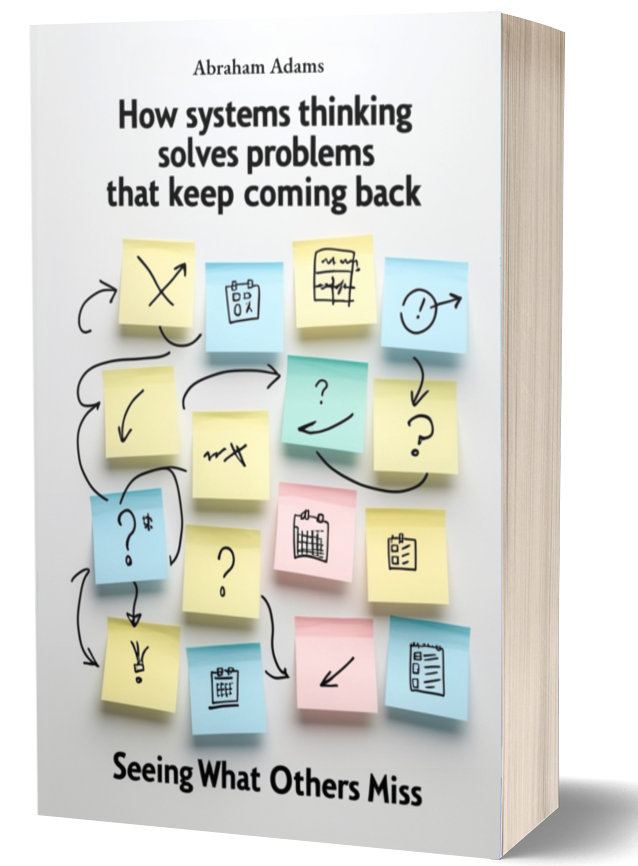
How Systems Thinking Solves Problems That Keep Coming Back

How Systems Thinking Solves Problems That Keep Coming Back

Many problems return again and again because the underlying system is never examined. This book introduces the practical mindset of systems thinking — a way to see incentives, feedback loops and hidden structures shaping outcomes.

Explore the Book →

How To Map The System

The Toolkit

The Toolkit

Practical methods to map systems, trace incentives, uncover feedback loops, and identify where real leverage exists. Learn how to analyse any system and understand how it truly works.

Explore the Toolkit →

How Money Flows

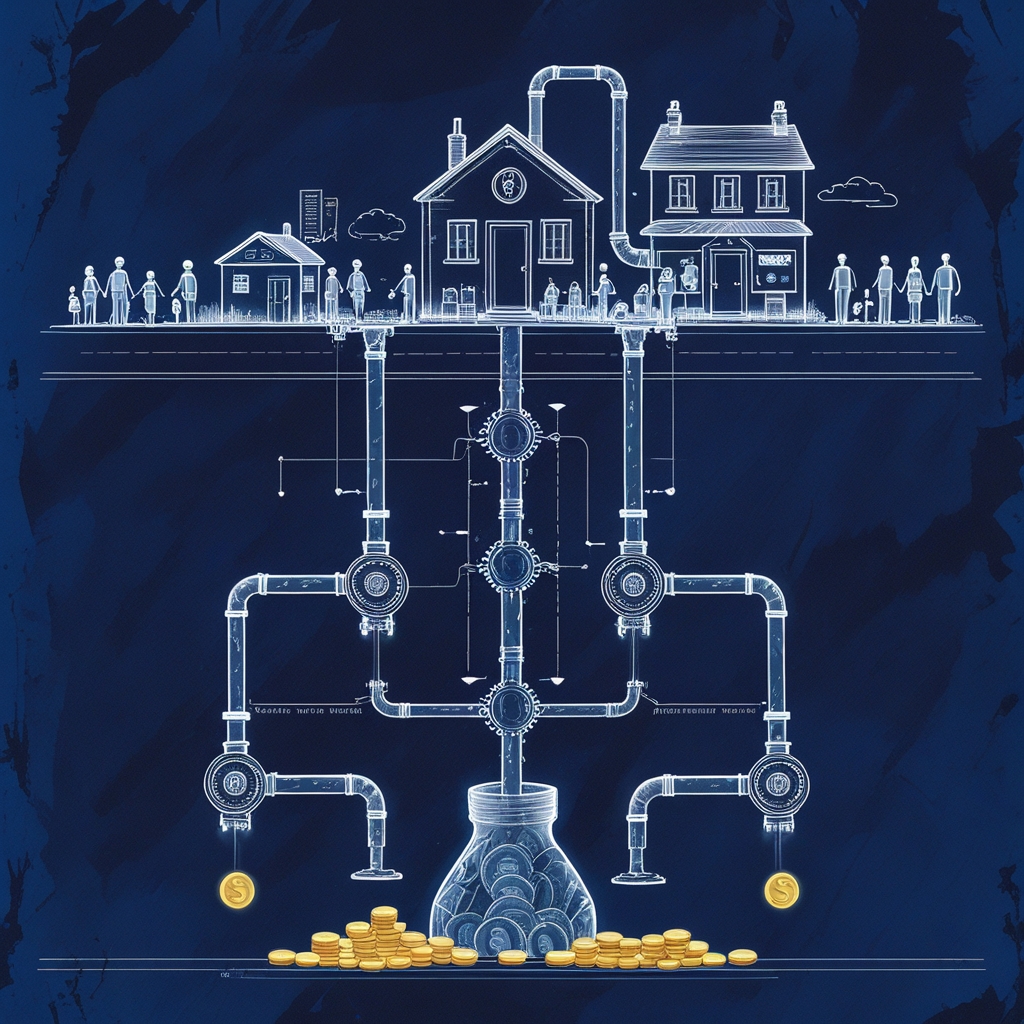
The Extraction Pattern

The Extraction Pattern

How extraction works across systems — where value is drawn from the many and concentrated toward the few through structure, incentives, and design.

Read the Article →

Books

Explore the Books

  • The Blueprint
  • Understanding Systems Thinking
  • How Systems Thinking Solves Problems That Keep Coming Back
  • The Chain Reaction Effect: Change One Thing, Change Everything
  • Browse Books

Topics

  • Home
  • Start Here
  • Systems
  • Toolkit
  • Fundamentals
  • Deep Dives

Deep Dives

  • The Money System
  • The Customer Service System
  • The UK Housing System
  • The UK Student Loan System
  • The UK Health System
  • The UK Childcare System

Resources

  • Books
  • Videos
  • Toolkit
  • Disclaimer
  • Privacy Policy
  • Contact Us
© 2026 Think On The System | Disclaimer | Privacy Policy